AI Is Changing Accounting — Why Future Accountants Should Embrace It
From automated bookkeeping to AI-assisted audit — how artificial intelligence is reshaping the profession, and what students entering the field should do about it now.
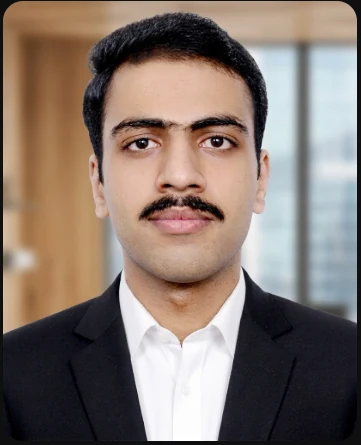
Muhammad Hassan Qureshi
BS Accounting & Finance · Future ACCA · Co-founder, LearnFinity
An accounting student with a technology diploma — writing from the exact intersection this article is about.
More about me →Every few weeks, someone asks me the same nervous question: “If AI can do bookkeeping, why am I studying accounting?” I understand the fear — headlines write themselves that way. But having spent the last few years studying accounting formally while learning to build the kind of software that automates it, I can tell you what the headlines miss: AI is not replacing accountants. It is replacing the boring half of accounting — and raising the value of everything else.
§ What AI is already doing
This is not a forecast; it is the present tense. Modern systems already read invoices and receipts automatically — extracting the vendor, amount and tax without a human typing anything. They categorise transactions, learning from past entries until the routine 80% of coding needs no touch at all. They match and reconcile bank feeds against ledgers, flagging only the exceptions — and exceptions are exactly what human judgement is for. Month-end close, which once consumed weeks of clerical effort, compresses toward days.
In audit, the change is even more striking. Traditionally, auditors sampled — examining a few hundred transactions out of millions, because examining all was impossible. AI has made “all” affordable: full-population testing, anomaly detection that hunts patterns no sample would catch, and continuous monitoring across the year instead of an annual snapshot. The auditor’s role shifts from checking arithmetic to investigating what the machine flags — and asking the questions machines cannot.
§ What AI cannot do — the honest list
Now the other half of the truth. A great deal of professional accounting is judgement under ambiguity, and judgement is precisely where AI is weakest.
- Estimates and assumptions. How long will this machine actually last? Is that inventory realistically sellable? These require reasoning about an uncertain future — and the courage to be accountable for the answer.
- Standards under ambiguity. GAAP and IFRS are principles-based frameworks. Applying them to a novel transaction — a new contract structure, an unusual business model — is professional reasoning, not pattern matching.
- Professional scepticism and ethics. An AI optimises for plausibility; an auditor is trained to doubt. Detecting management bias, challenging convenient numbers, and refusing to sign what should not be signed — that is the human core of the profession.
- Explaining and advising. Clients do not pay for outputs; they pay for understanding. Translating a ratio into a decision, sitting across a table and helping a business owner see their own situation clearly — there is no prompt for that.
§ So what should a student actually do?
Advice time — and I’ll keep it practical, because I am a student too and I distrust vague advice.
First, master the fundamentals harder than ever. AI produces outputs at astonishing speed — and someone must be able to tell when they are wrong. You cannot supervise a system whose underlying logic you never learned. Debits, credits, adjustments, statements: learn them so deeply that a machine’s mistake looks like a spelling error to you.
Second, become fluent with the tools. Excel at a serious level first — it remains the profession’s working language. Then accounting software, data tools, and the AI features arriving inside them. The accountant who can frame a problem for automation and verify its output sits on the valuable side of the divide.
Third, build the human skills deliberately. Communication, scepticism, ethics, business understanding. These are not “soft” extras anymore — they are the profession’s defensible core.
Fourth, learn a little of how the machines think. Not to become a programmer — just enough to demystify. A weekend of understanding what an AI model actually does replaces fear with strategy. (This is exactly why I completed my Python certification alongside my commerce studies — not to change careers, but to see clearly.)
§ The window right now
Here is the part I find genuinely exciting. Students entering accounting today are the first generation that can grow up bilingual — fluent in both ledgers and algorithms. The profession’s older members built their careers before this shift; its youngest members can build theirs across it. The ones who lean in early — who treat AI as a colleague instead of a threat — will define how the profession works for the next forty years.
That is precisely the combination I am building in my own career: the BS Accounting & Finance degree and ACCA pathway on one side, and technology skills plus real shipped products on the other. If you are walking a similar path, or wondering how to start one, that conversation is exactly what my tech-for-accounting sessions are for.
Written by Muhammad Hassan Qureshi
BS Accounting & Finance · Future ACCA
Studying the field, building the tools, writing it down as I go. Next article: the 700-year-old invention that still runs the world — and its blockchain-era successor.
Talk to me on WhatsApp →